
Operating to Chile: Understanding the New API Requirements
Chile has implemented new Advance Passenger Information (API) requirements for commercial passenger transport operations, including business aviation charter flights. Beyond the introduction of a new reporting platform, the requirement to submit passenger and crew information at three different stages of flight preparation deserves particular attention from operators. To better understand the scope of these requirements and their practical application to business aviation, we have reviewed the official regulatory framework for Chile’s APIS platform.
Definitions
The regulation defines passenger transport companies as individuals or legal entities engaged in the transportation of passengers for profit, encompassing commercial charter operations within business aviation.
The requirement applies to:
International flights arriving in Chile.
International flights departing from Chile.
Domestic flights within Chile.
Regarding private, non-commercial operations, further clarification has been requested concerning their regulatory treatment and applicable procedures. Our inquiry has been referred to the relevant government counterpart, and confirmation remains pending.
Regulatory Framework and Scope
The regulation was published in Chile’s Official Gazette on May 12, 2026 and finalized on August 6, 2026 defining the regulatory framework for the submission of Advance Passenger Information (API) and Passenger Name Record (PNR) data pursuant to Article 100 of Chile’s Migration and Foreigners Law No. 21.325. Decree No. 160, published on November 11, 2026, postponed the implementation of the PNR reporting requirement until November 12, 2027. This postponement does not affect the API requirement, which is already in force.
API Transmission Requirements
One of the most significant operational aspects of Chile’s implementation is the requirement to transmit API information at three separate stages for each flight subject to the regulation.
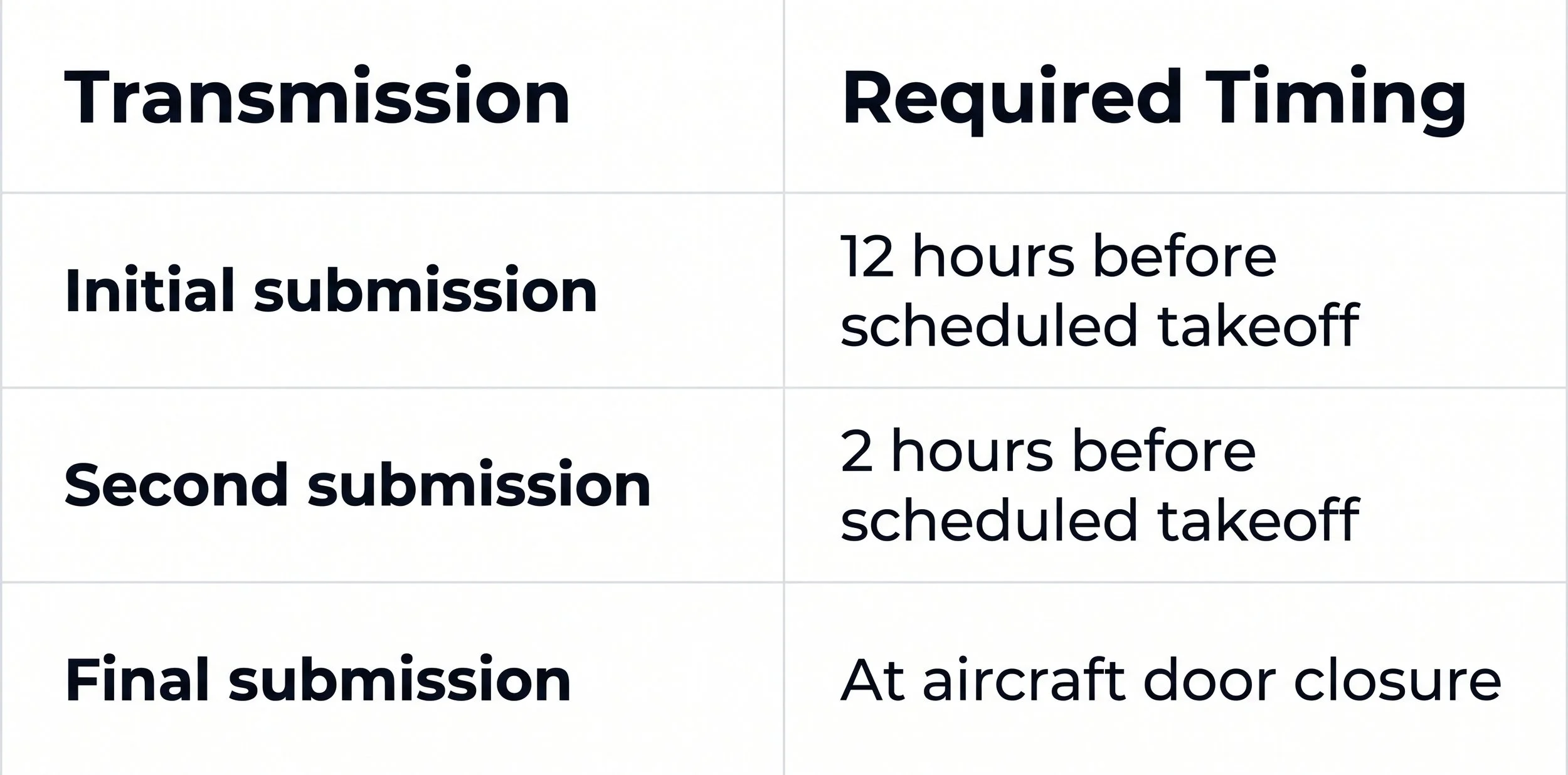
The final transmission must reflect the consolidated information available at door closure, including boarded passengers, transit passengers and crew members, as applicable.

Short-Notice Operations
For commercial charter operations, these reporting deadlines should also be considered within the context of Chile’s existing landing permit process. Landing permit applications normally require at least 72 hours’ advance notice. Under standard processing conditions, commercial charter flights arranged with less than 12 hours’ notice are therefore unlikely. However, the API reporting procedure applicable to exceptional short-notice operations remains pending official clarification.
Operator Registration and Platform Access
Enrollment in Chile’s public APIS platform is not an automatic self-registration process. Operators must request enrollment directly through the Securiport technical support team, providing the required information. Once the information has been reviewed and verified against government-provided records, Securiport will proceed with registration and issue the corresponding access credentials.
The public APIS platform provides two methods for submitting manifest information:
Uploading the designated Excel template.
Entering manifest information manually through the platform.
Third-Party API Submission and Operator Responsibility
Securiport confirmed that CST Flight Services is authorized to submit APIS transmissions at the request of the corresponding operators. However, while API submission may be delegated to authorized users, legal responsibility remains with the operator.
Non-Compliance and Operational Contingencies
Chile’s Migration and Foreigners Law No. 21.325 establishes financial penalties for non-compliance with passenger reporting requirements. Cases of non-compliance are reported by the Policía de Investigaciones de Chile (PDI) to the National Migration Service for the corresponding enforcement proceedings. Neither the decree nor the transmission protocol establishes separate penalty amounts for late submissions or missed individual transmission deadlines, nor do they specify whether such infringements may result in additional operational restrictions. However, this should not be interpreted as an exemption from compliance, as the applicable legislation establishes penalties for failures to submit the required passenger information.
An Operational Perspective
Advance passenger reporting is not new to business aviation. However, each country introduces its own procedures, timelines and operational challenges. What makes Chile’s implementation particularly relevant is the requirement for three separate transmissions in an industry where changes to schedules, passenger manifests and crew assignments are part of everyday operations. From our perspective, the effectiveness of this process will depend not only on access to the platform, but also on how well operators integrate these reporting requirements into their existing operational workflows. Several practical aspects still require clarification, particularly the treatment of short-notice operations, changes to flight information and private, non-commercial flights. We will have to take great care to see how these procedures evolve as the API regulation and system is implemented across non-scheduled commercial operations.
At CST Flight Services, we will continue to follow these developments and share relevant updates as further official information becomes available.